


Co-infusion of CD19-targeting and BCMA-targeting CAR-T cells for treatment-refractory systemic lupus erythematosus: a phase 1 trial
24 September 2025


Clinical evaluation of CD22 CAR-T in r/r B-ALL, demonstrating activity in patients who relapsed after CD19-directed therapy and supporting CD22 as a viable alternative target.
IMPORTANCE: CD19-directed chimeric antigen receptor (CAR) T-cell therapy induces high remission rates in relapsed or refractory B-cell acute lymphoblastic leukemia (B-ALL), but relapse, which is often due to antigen loss, remains a major challenge. Dual-targeting CD19/CD22 CAR T-cell strategies may be associated with reduced antigen-negative relapse and improved remission durability.
OBJECTIVE: To evaluate the safety and efficacy of bicistronic CD19/CD22 CAR T-cell therapy in pediatric patients with relapsed or refractory B-ALL. DESIGN, SETTING, AND PARTICIPANTS: This open-label, multicenter, phase 2 nonrandomized clinical trial enrolled pediatric patients with B-ALL at 5 major medical centers in China from January 2022 to August 2024, with a data cutoff of February 28, 2026. Median follow-up was 35.7 months (IQR, 29.8-41.0 months). Of 346 screened, 38 (11.0%) were excluded and 308 (89.0%) were eligible. A safety run-in established the recommended phase 2 dose, followed by cohorts with refractory disease, hematologic relapse, or isolated extramedullary relapse.
INTERVENTION: CD3-positive T cells were activated and transduced with a bicistronic lentiviral vector that encoded anti-CD19 and anti-CD22 CARs, then infused fresh after 5 to 7 days in culture. Lymphodepleting chemotherapy included fludarabine and cyclophosphamide. Consolidative transplant was reserved for patients with KMT2A- or ZNF384-rearranged acute lymphoblastic leukemia. MAIN OUTCOMES AND MEASURES: Primary end points were safety, recommended phase 2 dose, event-free survival (EFS), and toxic effects of bicistronic CAR-T therapy in relapsed or refractory B-ALL, with or without transplant.
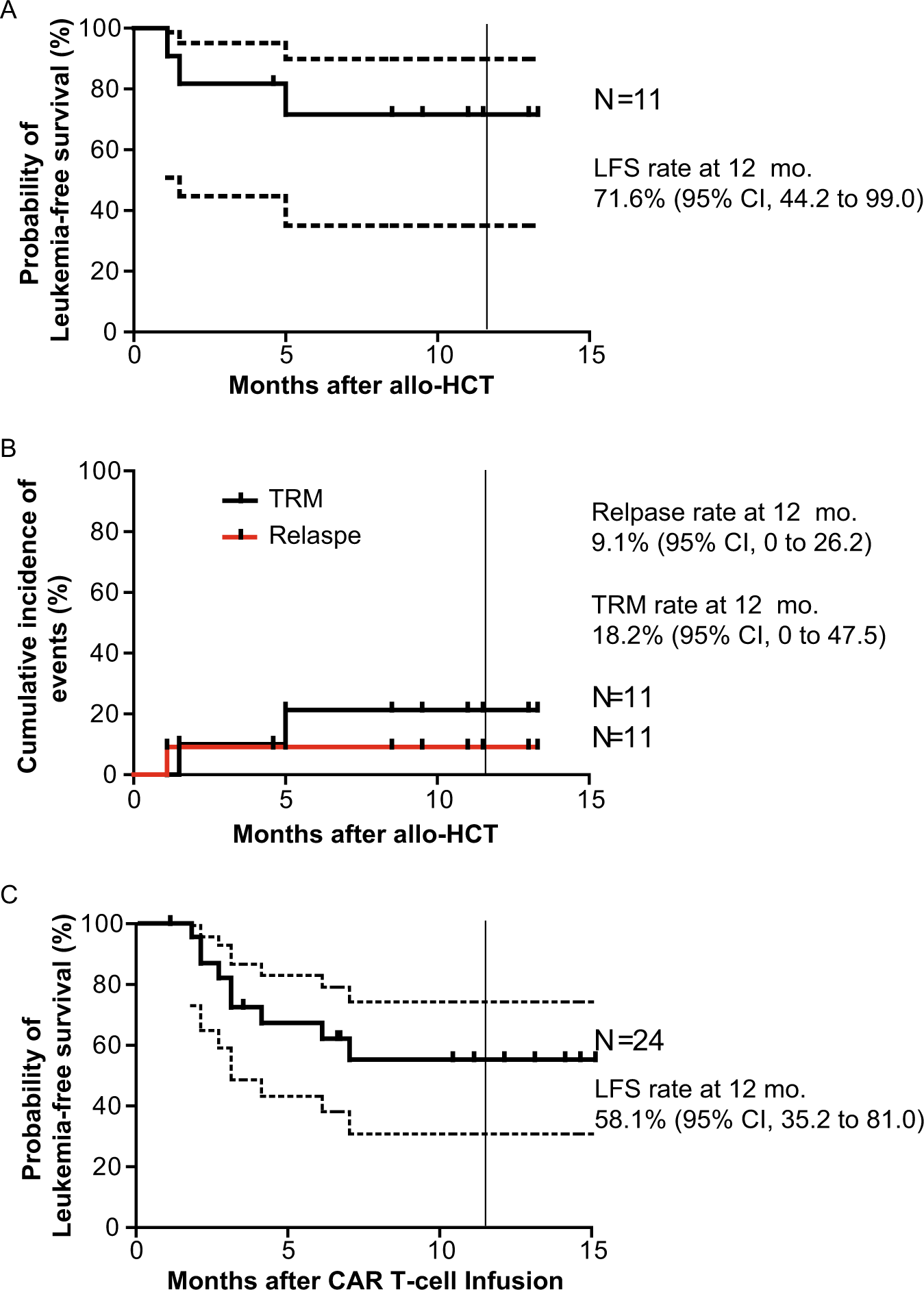
RESULTS: Among 261 patients (98 girls [37.6%]; mean [SD] age, 8.2 [3.8] years) with relapsed or refractory disease, 259 (99.2%) achieved complete remission with negative minimal residual disease. EFS was 70.9% (95% CI, 65.6%-76.7%) at 12 months, 63.2% (95% CI, 57.6%-69.4%) at 24 months, and 61.7% (95% CI, 55.9%-68.0%) at 36 months. Consolidative transplant was associated with improved EFS; the 24-month EFS was 57.9% (95% CI, 51.6%-65.0%) in patients without a transplant vs 85.7% (95% CI, 76.5%-96.1%) in patients with a transplant (P = .004). In 20 patients with isolated central nervous system relapse and 20 with testicular relapse, 24-month EFS was 60.0% (95% CI, 43.6%-82.6%) and 80.0% (95% CI, 64.3%-99.6%), respectively. Grade 3 to 4 cytokine release syndrome occurred in 129 patients (49.4%), and immune effector cell-associated neurotoxic effects occurred in 34 patients (13.0%).
CONCLUSIONS AND RELEVANCE: In this nonrandomized clinical trial, bicistronic CD19/CD22 CAR T-cell therapy induced high rates of minimal residual disease-negative remission, with durable EFS in pediatric B-ALL. These findings support further evaluation in prospective trials.
Journal: Leukemia. 2019 Dec.
Volume / Pages: 33(12):2854-2866
DOI: 10.1038/s41375-019-0488-7
PubMed: PubMed: 42690647


