


Co-infusion of CD19-targeting and BCMA-targeting CAR-T cells for treatment-refractory systemic lupus erythematosus: a phase 1 trial
24 September 2025


Phase 2 study showing sequential CD19/CD22 CAR-T therapy delivers high complete remission rates with manageable toxicity in adult r/r B-ALL, with most responders achieving MRD-negative status.
BACKGROUND: Sequential CD19 and CD22 chimeric antigen receptor (CAR)-T cell therapy offers a promising approach to antigen-loss relapse in relapsed/refractory (R/R) B-cell acute lymphoblastic leukemia (B-ALL); however, research in adults remains limited.
METHODS: This study aimed to evaluate the efficacy and safety of sequential CD19 and CD22 CAR-T cell therapy in adult patients with R/R B-ALL between November 2020 and November 2023 (ChiCTR2100053871). Key endpoints included the adverse event incidence, overall survival (OS), and leukemia-free survival (LFS).
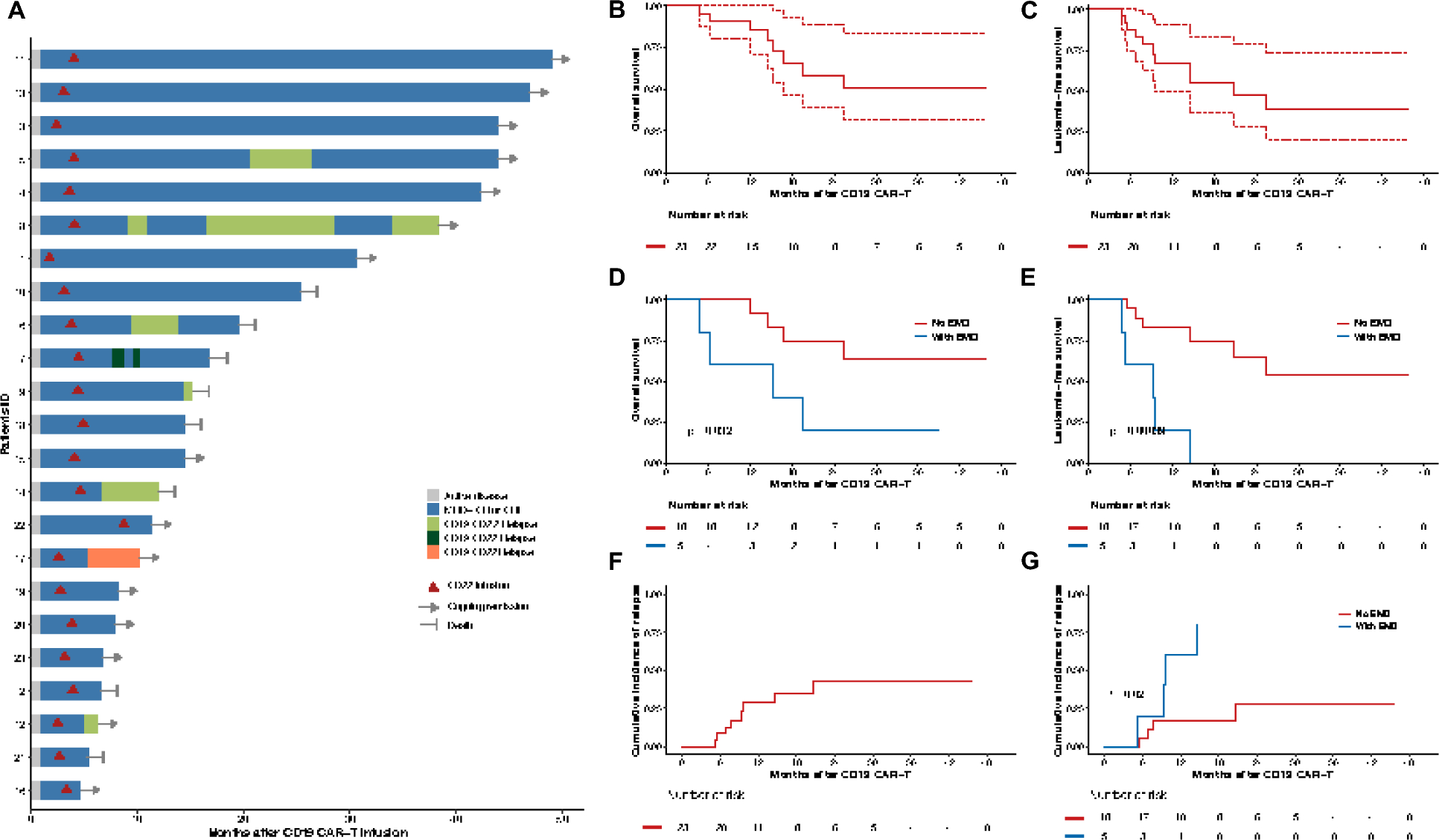
RESULTS: Twenty-three patients with a median age of 58.1 years (range 25.9-75.0) were enrolled. High-risk cytogenetic and genomic aberrations were identified in 43.5% of patients, and five patients had baseline extramedullary disease (EMD). The median interval between the two infusions was 3.8 months. Grade ≥ 3 hematological adverse events occurred at comparable rates after both infusions. Cytokine release syndrome was observed in 78.3% and 39.1% of patients after CD19 and CD22 CAR-T therapy, respectively. Two patients experienced grade 2 immune effector cell-associated neurotoxicity syndrome (ICANS) during CD19 CAR-T, and no ICANS was reported during CD22 CAR-T. The median OS was not reached with a median follow-up of 19.4 months (range 8.7-45.6), while the median LFS was 20.8 months. OS and LFS rates were 91.3% and 67.1% at 1 year and 58.6% and 47.0% at 2 years, respectively. Eight patients experienced relapse, with the cumulative incidence of relapse being 28.6% at 1 year and 42.5% at 2 years. Higher baseline leukemia burden (≥ 64% bone marrow blasts) and the presence of EMD were significant risk factors for inferior OS and LFS, respectively. CONCLUSIONS: Sequential CAR-T cell therapy demonstrated durable efficacy and a manageable safety profile in R/R B-ALL, providing a viable option to address antigen-loss relapse and improve long-term outcomes in high-risk adult patients.
Journal: Exp Hematol Oncol. 2025 Jan 3.
Volume / Pages: 14(1):2
DOI: 10.1186/s40164-024-00593-5
PubMed: PubMed: 39754190


