


Co-infusion of CD19-targeting and BCMA-targeting CAR-T cells for treatment-refractory systemic lupus erythematosus: a phase 1 trial
24 September 2025


Phase I trial validating a simplified autologous CD7 CAR-T manufacturing process without T-cell pre-selection, expanding accessibility for pediatric r/r T-ALL patients.
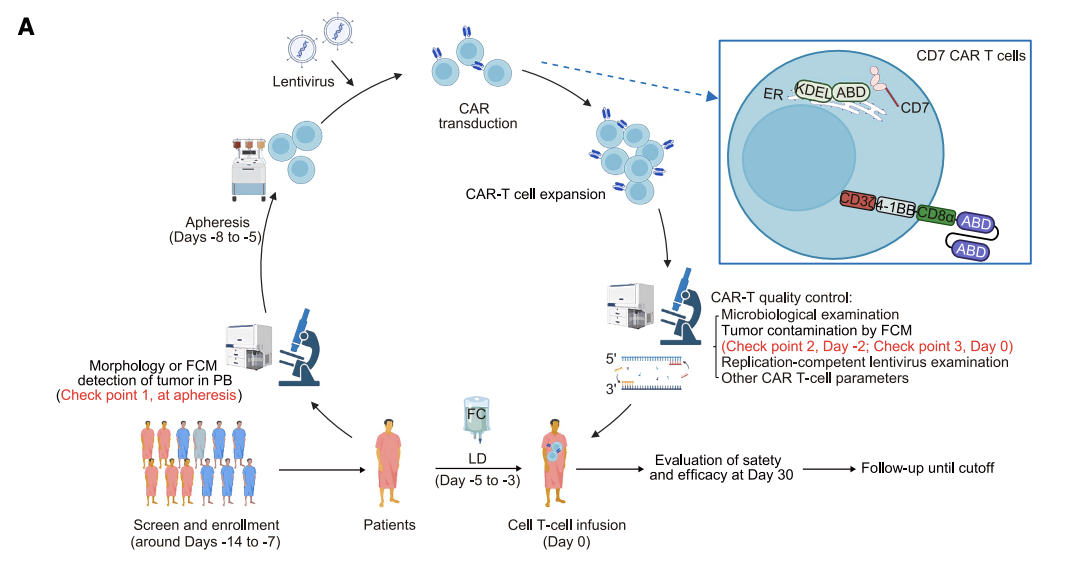
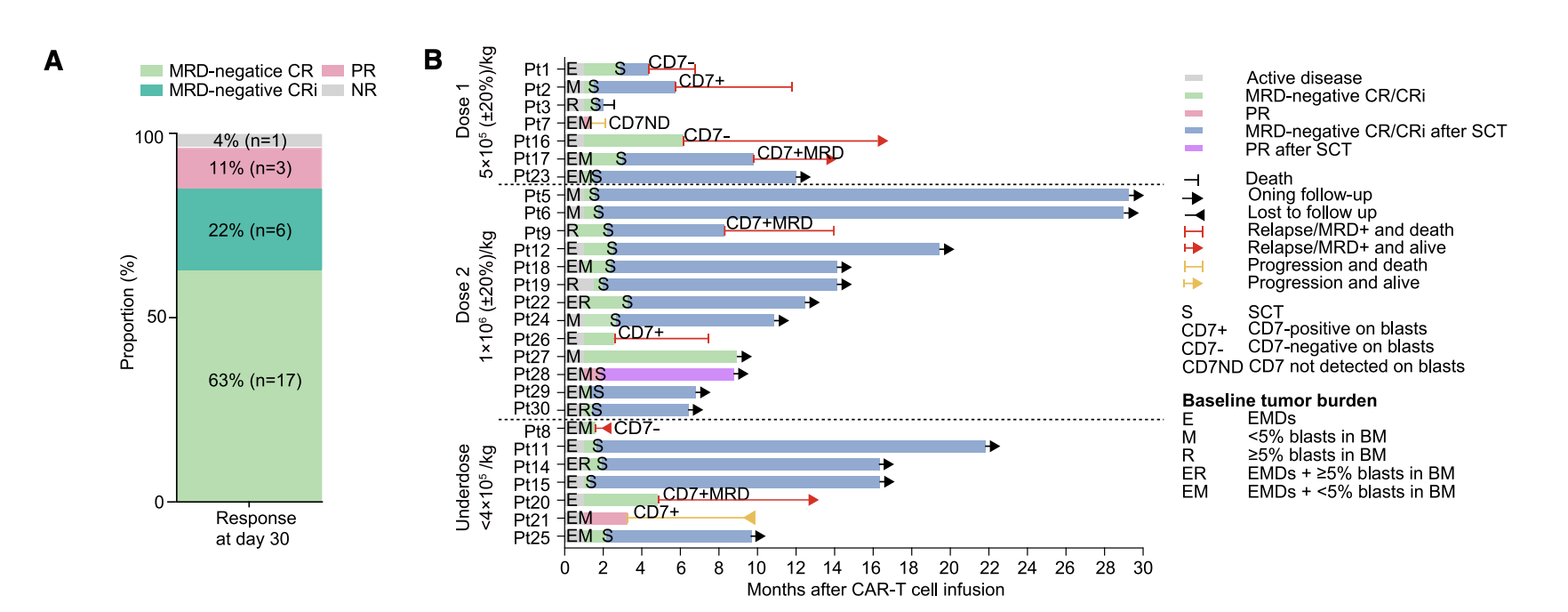
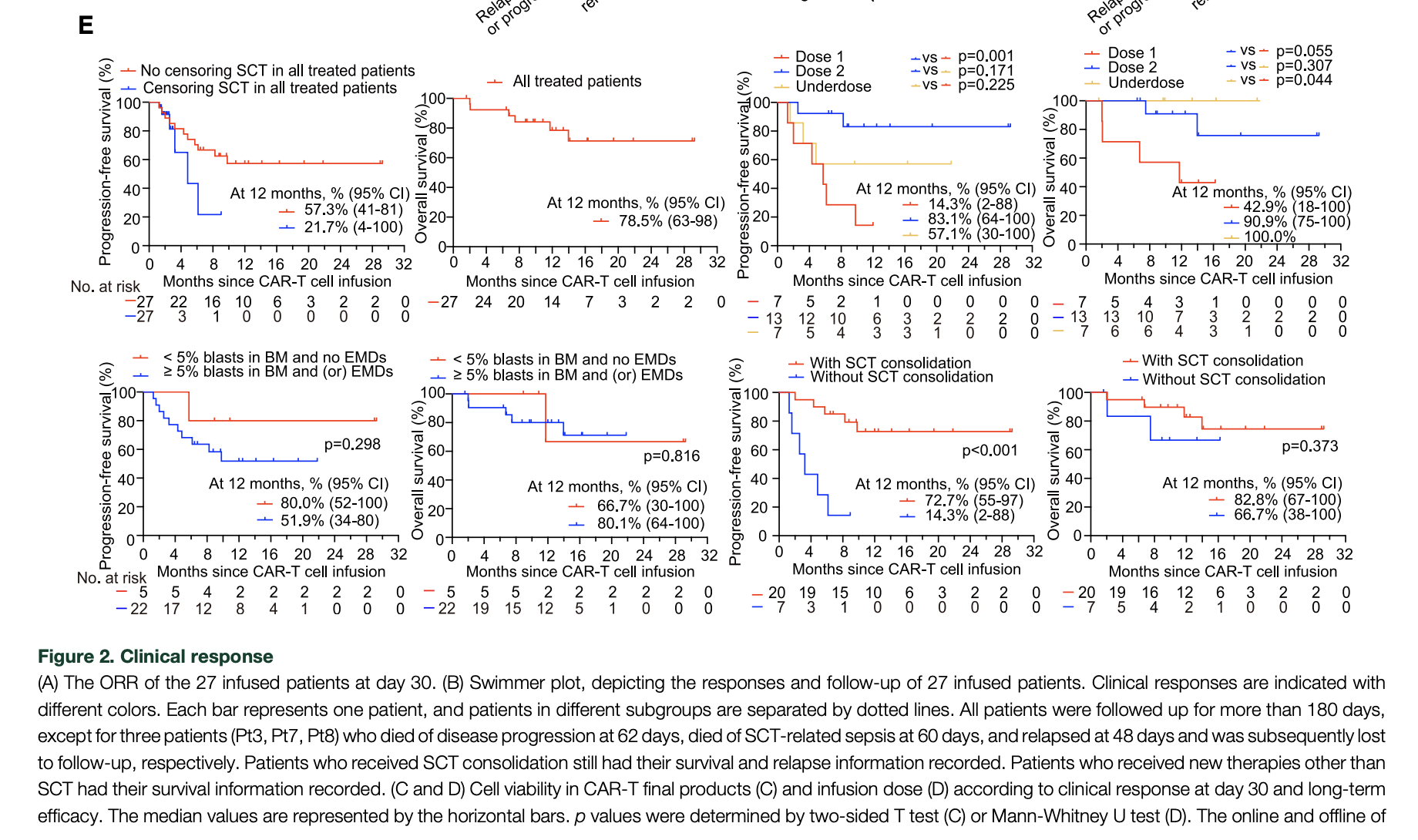
Chimeric antigen receptor (CAR)-T cell therapy showed preliminary activity in patients with refractory or relapsed T cell acute lymphoblastic leukemia (r/r T-ALL). However, many obstacles remain, including manufacturing difficulties and risk of infections. This phase I study (NCT04840875) evaluated autologous CD7 CAR-T cells manufactured without pre-selection of healthy T cells in r/r T-ALL. Thirty patients (29 children and one adult) with a median of two lines of prior therapy but without detectable peripheral leukemia were enrolled. Excluding three cases of manufacturing failures, a total of 27 (90%) patients received infusions after products were confirmed free of leukemia contamination, including 16 (59%) meeting planned target doses. Common adverse events within 30 days included grade 3-4 cytopenias (100%), grade 1-2 (70%) and 3-4 (7%, including one dose-limiting toxicity) cytokine release syndrome, grade 1 neurotoxicity (7%), grade 2 infection (4%), and grade 2 graft-versus-host disease (4%). Two patients developed grade 2 infections after day 30. At day 30, 96% responded and 85% achieved complete remission (CR) or CR with incomplete hematologic recovery (CRi). Seventy-four percent underwent transplantation. Twelve-month progression-free survival with and without censoring transplantation was 22% (95% confidence interval 4%-100%) and 57% (41%-81%), respectively. These results support that autologous CD7 CAR-T therapy without T cell pre-selection is feasible in patients with r/r T-ALL.
Volume / Pages: S1525-0016(24)00594-X
DOI: 10.1016/j.ymthe.2024.09.006
PubMed: PubMed: 39244642


