


Co-infusion of CD19-targeting and BCMA-targeting CAR-T cells for treatment-refractory systemic lupus erythematosus: a phase 1 trial
24 September 2025


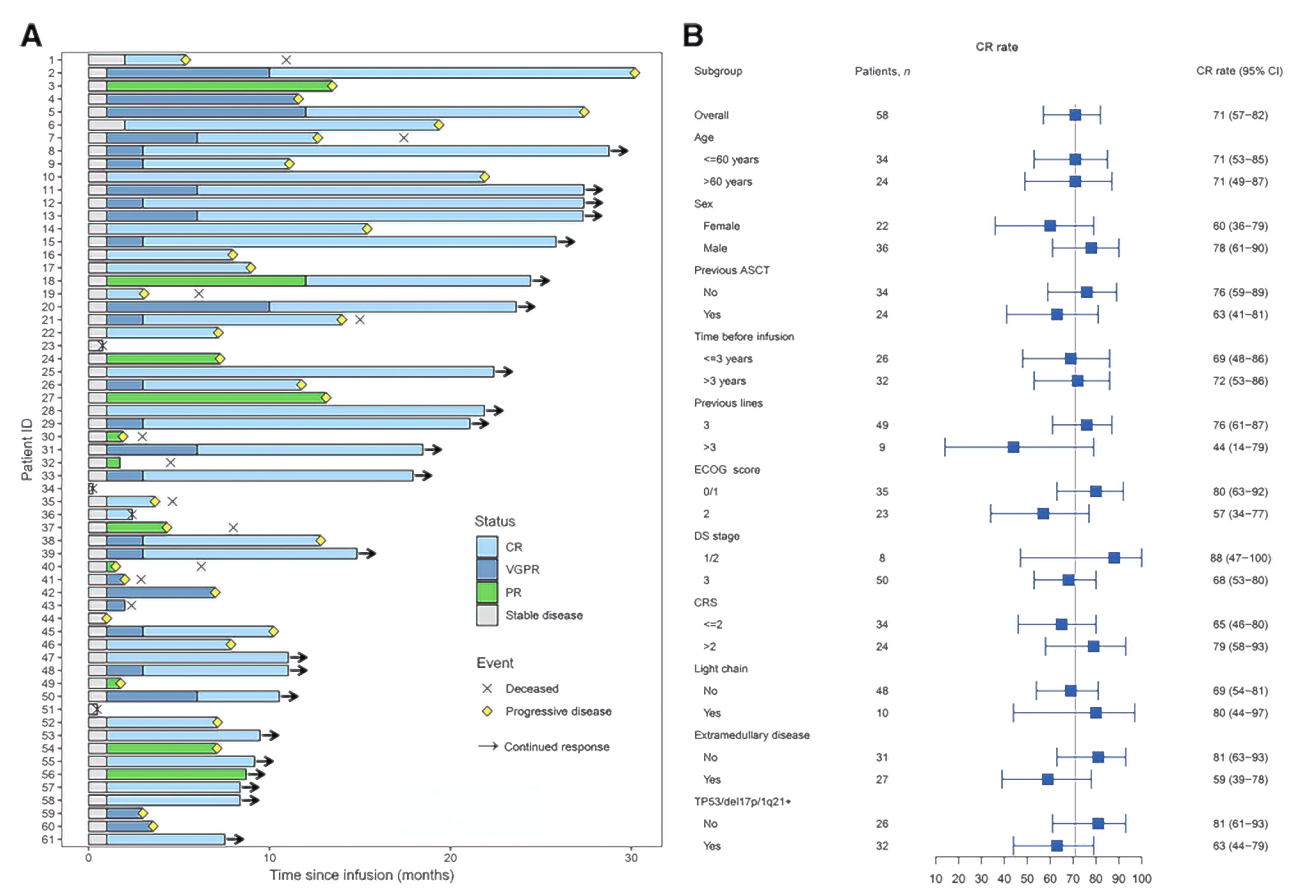
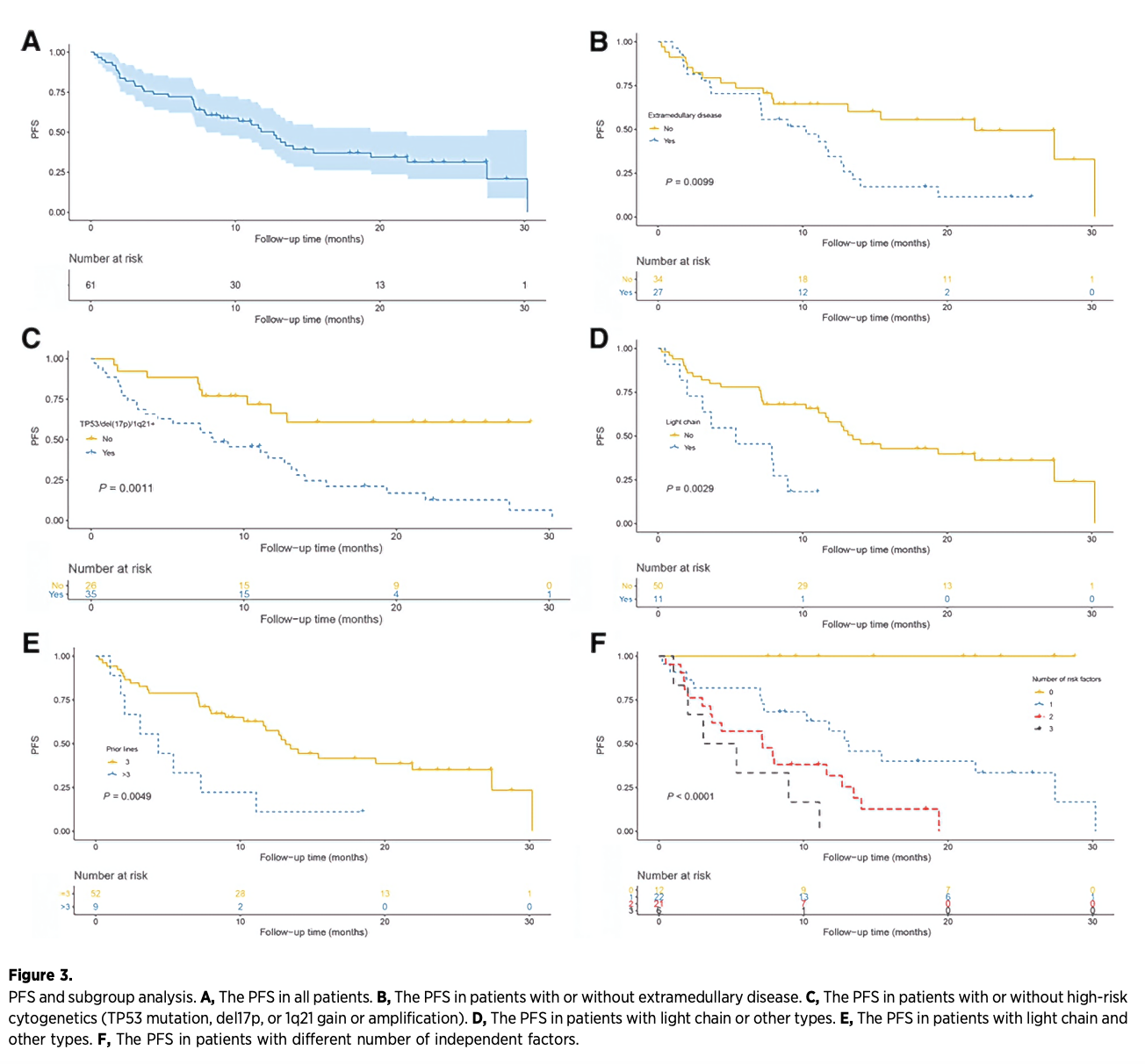
Results:Sixty patients (98.4%) experienced cytokine release syndrome (CRS), including 33, 23, and 4 cases of CRS grades 1 to 2, 3, and 4, respectively. The objective response rate (ORR) was 98.3%, and the complete remission (CR) rate was 70.3%. With a median follow-up period of 21.1 months, the 1-year overall survival (OS) and progression-free survival (PFS) rates were 78.0% and 50.2%, respectively. The median PFS was 12.7 months. Cox modeling revealed that poor PFS was associated with extramedullary disease [HR = 2.59, 95% confidence interval (95% CI) = 1.29–5.21,P= 0.008], light chain multiple myeloma (HR = 2.53, 95% CI = 1.03–5.97,P= 0.035), high-risk cytogenetics (HR = 2.80, 95% CI = 1.27–6.14,P = 0.01), and prior treatment with more than 3 therapeutic lines (HR = 3.14, 95% CI = 1.34–7.34,P= 0.008). Among the 41 CR cases, competing risk analyses demonstrated higher relapse predispositions in those with extramedullary disease (HR = 4.51, 95% CI = 1.86–10.9,P= 0.001), light chain multiple myeloma (HR = 4.89, 95% CI = 1.52 – 15.7,P = 0.008), or high-risk cytogenetics (HR = 5.09, 95% CI = 1.63–15.9,P= 0.005).
Conclusions:Anti-BCMA CAR T-cell therapy is safe and effective for R/R multiple myeloma. For patients with high-risk factors, improvements to extend remission and more specific individualized therapies are needed
Journal: Mol Ther. 2021 Feb 3.
Volume / Pages: 29(2):645-657
DOI: 10.1016/S2352-3026(25)00048-1


