

CD19 CAR T-Cell Therapy for Autoimmune Hemolytic Anemia
14 January 2026


Phase 1 trial showing that sequential co-infusion of CD19 and BCMA CAR-T cells induces deep B-cell depletion and sustained drug-free remission in refractory SLE patients.
Systemic lupus erythematosus (SLE) remains refractory to conventional immunosuppression in a subset of patients. In treatment-refractory SLE, we show that peripheral CD19⁺ B cells and bone marrow CD19⁻BCMA⁺ long-lived plasma cells are dominant autoantibody sources, motivating dual CD19 and BCMA targeting. Here we report results from a cohort of patients (14 female, one male) in an ongoing phase 1 dose-escalation trial of co-infused autologous anti-CD19 and anti-BCMA chimeric antigen receptor (CAR) T cells after fludarabine/cyclophosphamide lymphodepletion. Primary endpoints were dose-limiting toxicities (DLTs) within 28 days and adverse events within 12 weeks; key secondary endpoints comprised attainment of Lupus Low Disease Activity State (LLDAS) and DORIS remission within 12 weeks and in vivo CAR-T persistence within 24 weeks. Exploratory endpoints were the duration of post-infusion B cell depletion and time to recovery, the kinetics of immune reconstitution and longitudinal changes in autoantibody titers and serum immunoglobulin concentrations after CAR-T therapy. Over a median 712-day follow-up (range, 613-1,134), no DLTs occurred. Grade 1 cytokine release syndrome developed in 86.7% of patients, with no neurotoxicity or treatment-related deaths. The most common grade 3 or higher adverse events were neutropenia (100%), thrombocytopenia (40%) and anemia (13.3%), all of which were reversible with supportive care. By week 12, 12 of 15 patients (80%) fulfilled both the LLDAS and DORIS remission criteria. Multiomic analyses confirmed elimination of autoreactive CD19⁺BCMA⁺ clones, reconstitution of naive IgM/IgD B cells and durable downregulation of interferon-stimulated and BAFF-dependent signatures, indicating improved immune homeostasis. Longitudinal monitoring of three patients for 1 year demonstrated sustained eradication of pathogenic clones, suggesting potential cure. Dual anti-CD19/anti-BCMA CAR-T cell therapy demonstrates good safety and promising clinical efficacy in treatment-refractory SLE. This study supports the further development of this treatment approach for patients with rSLE 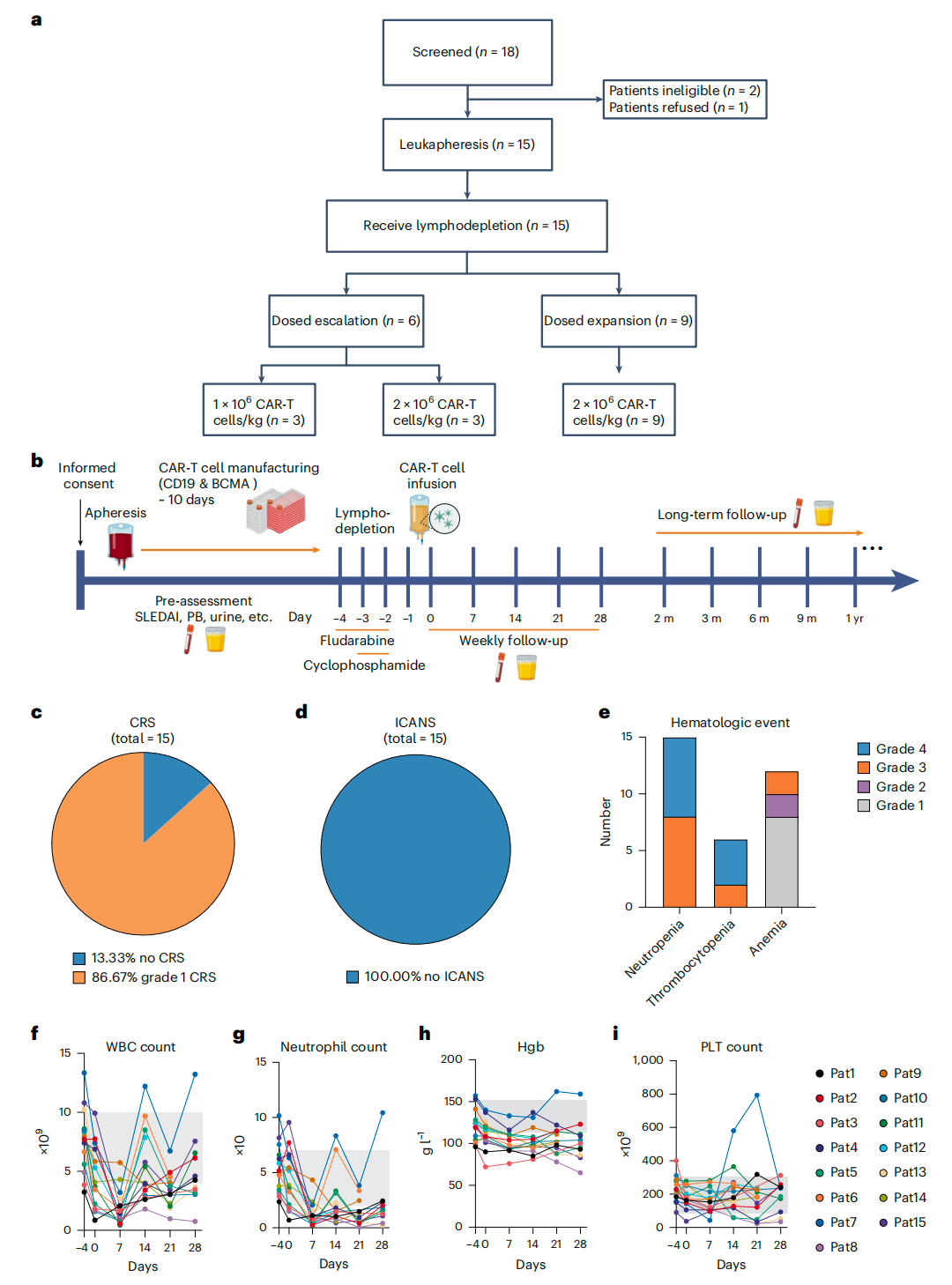
Journal: Nat Med. 2025 Sep 24.
Volume / Pages: (2024 IF:50)
DOI: 10.1038/s41591-025-03937-8
PubMed: PubMed: 40993243


